

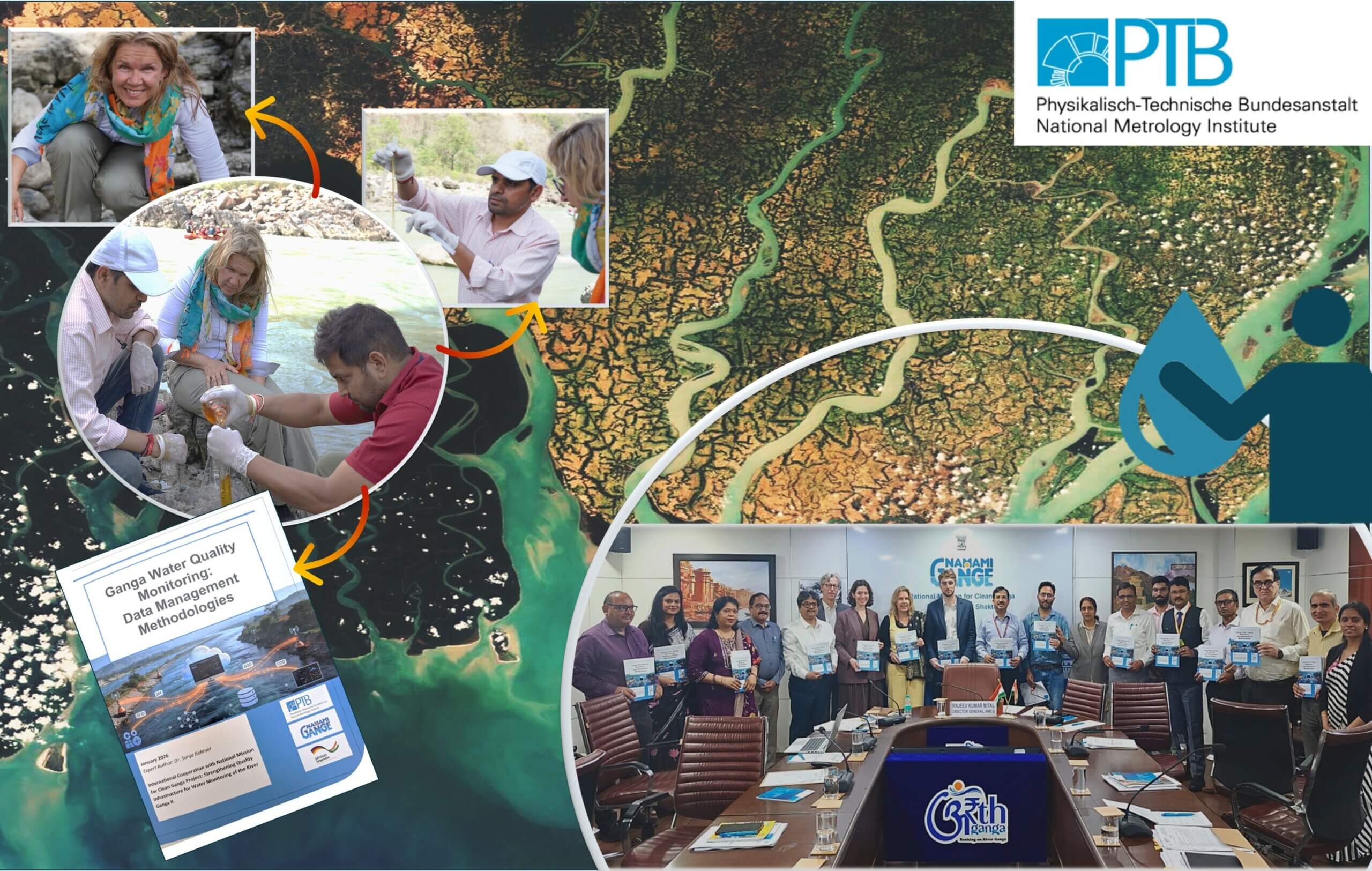
PTB prioritizes capacity building, knowledge sharing, and collaboration
Context
The Government of India aims to implement both voluntary and mandatory measures to improve the water quality of the Ganges River. To achieve this, the government must be able to demonstrate that these measures genuinely contribute to reducing pollution and restoring the river’s ecosystem. This goal requires reliable, comparable, verifiable, and, above all, defensible data—that is, data robust enough to withstand criticism and pass the most rigorous audits.
As part of a project of international cooperation, the German National Metrology Institute (PTB) has been collaborating since 2023 with the Government of India and the National Mission for Clean Ganga (NMCG—the organization responsible for coordinating on-the-ground implementation nationwide), to strengthen the skills of local stakeholders and the quality assurance processes for the whole Ganges Water Quality Monitoring Program (WQMP).
Challenge
In order to help stakeholders adopt and implement best practices for quality control in the acquisition, management, analysis, and communication of water quality data, PTB looked for experts with a holistic understanding of the entire data production chain—from planning sampling campaigns to reporting, and including laboratory analysis protocols. However, such cross-disciplinary expertise is quite rare.
It was through Maris Berlin, a regional water sector competitiveness cluster, that PTB learned about WaterShed Monitoring and the unique expertise of its team, which integrates all stages of a WQMP, as well as a deep understanding of the roles and responsibilities of all the different stakeholders. PTB’s attention was caught by the team’s ability to connect the planning phase, field constraints, and the realities experienced by laboratory technicians, as well as quality control criteria.
Solution
Together, PTB and WaterShed Monitoring developed a comprehensive support program for all stakeholders involved in the Ganges WQMP, providing them with tools to make the best possible decisions while taking into account their specific realities and constraints.
This program is structured around four main components:
Empowering Stakeholders in the Data Acquisition Chain
A series of webinars allowed WaterShed Monitoring experts to share their knowledge with various groups of stakeholders. Next, in-class workshops, in-the-field coaching and shadowing provided local participants with the tools to adapt theoretical concepts to the realities and specific constraints of the field, without compromising the validity of the data produced.
Audit of Data Management and Utilization Processes
Our experts reviewed existing protocols to ensure they met data traceability requirements and complied with international standards.
Recommendations and Collaborative Development of an Action Plan
Guided workshops enabled local stakeholders to assess the relevance of expert recommendations, define their priorities, and reach consensus on the measures to be implemented.
Knowledge Management
Production of video tutorials, work instructions, methodological guides, and protocols to facilitate knowledge transfer and the application of recommendations within the different organizations involved.
Results
This stakeholder empowerment program raised awareness among more than fifty individuals within the various organizations involved in monitoring the water quality of the Ganges River.
“By bringing together the different groups of stakeholders in the same workshop, each link in the information production chain becomes aware of the needs and expectations of the other links. This mutual understanding generates empathy and more harmonious interactions, which encourages collaboration among stakeholders.”

CEO and Founder WaterShed Monitoring
Furthermore, reinforcing best practices has a direct impact on the robustness of the data produced.
Thanks to these positive outcomes, the PTB project gained considerable traction. WaterShed Monitoring’s mandate was extended several times to expand our contribution to new stages in the knowledge production chain.
In 2025, the focus has shifted to managing and sharing the information produced. Participatory workshops were organized with stakeholders to assess current processes. Recommendations were then formulated, followed by collaborative work to identify priority actions to better preserve, structure, and use the collected data.